Williams’ season-best F1 qualifying ruined by big Carlos Sainz penalty at Azerbaijan GP
Carlos Sainz has been hit with a large penalty for an infringement in Azerbaijan Grand Prix qualifying.

A season-best Formula 1 qualifying result at the Azerbaijan Grand Prix for Williams has been wrecked by a significant penalty for Carlos Sainz.
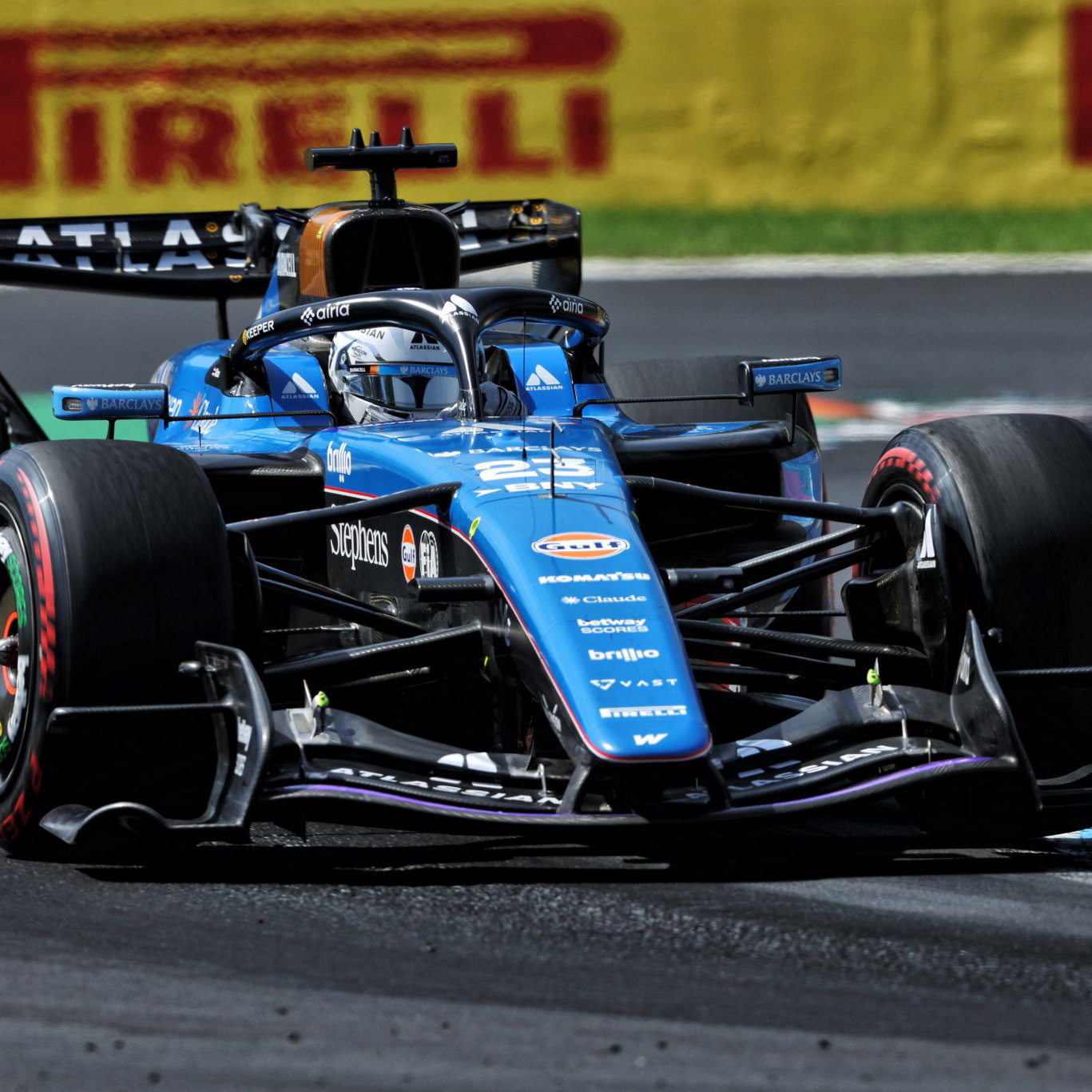
Sainz got his upgraded Williams through to Q3 for the first time in 2026 and claimed a brilliant ninth on the grid with a superb performance in Baku qualifying.
But the impressive result has been overshadowed and undone after Sainz was hit with a five-place grid drop for failing to slow sufficiently for yellow flags when Lando Norris went off ahead of him during the final part of qualifying.
As a result, Sainz slips from P9 and will start Saturday’s 51-lap Azerbaijan Grand Prix from 14th, marking a huge blow to Williams’ hopes of scoring rare points.
Sainz, who had already been reprimanded on Friday for the same infringement during final practice, has also been handed two penalty points on his drivers’ licence, taking him up to four for the 12 month period.
“Single Yellow Flags were displayed in Marshalling Sectors 4 and 5, in particular after Turn 2 and on the approach to Turn 3. The Yellow indications were clearly visible and SAI had also received a radio warning from the Team: “Yellow ahead, lift.” SAI confirmed at the hearing that he was aware of the Yellow Flag situation,” the stewards said in their verdict.
“SAI explained that he intended to demonstrate a reduction in speed across the Yellow area as a whole. He stated that he did not consider it necessary to reduce speed on the straight and instead intended to demonstrate his response when approaching and exiting Turn 3. He considered this to be a “global lift” covering the consecutive Yellow sectors. He further explained that the car which had originally caused the Yellow was no longer in the run-off area and that he expected the Yellow Flags to be withdrawn.
“The Stewards did not accept this interpretation. Where consecutive marshalling sectors are subject to Yellow Flag conditions, a driver must demonstrate a significant reaction to reduce speed in each individual Yellow marshalling sector. A reduction in a subsequent sector cannot retrospectively satisfy the requirement applicable to the preceding Yellow sector. The obligation is also not dependent on the driver’s own assessment of whether the original hazard remains present within a particular part of the Yellow sector.
“The telemetry clearly showed that SAI’s reaction to the Yellow occurred only in Marshalling Sector 5. There was no meaningful reduction in speed in Marshalling Sector 4 which could realistically be attributed to a response to the Yellow. Indeed, SAI recorded his fastest time of the session in Marshalling Sector 4.
“The Stewards therefore did not accept that the subsequent lift in Marshalling Sector 5 constituted a sufficient “global” response covering both sectors. This is distinguishable from cases where the telemetry demonstrates a significant response to the Yellow even though the overall sector time reduction is relatively small.
“In the present case, SAI was aware of the Yellow, had received an explicit warning from the Team, the Yellow indications were clearly visible and the telemetry established that he did not demonstrate the required reaction in Marshalling Sector 4.
"The Stewards therefore determine that SAI failed to sufficiently reduce speed under the Single Yellow Flag in Marshalling Sector 4.
“The standard penalty under the Penalty Guidelines for this infringement during Qualifying is a drop of 5 grid positions.”

Lewis regularly attends Grands Prix for Crash.net around the world. Often reporting on the action from the ground, Lewis tells the stories of the people who matter in the sport.